Christopher Nolan’s beautiful The Odyssey reinvents one of history’s greatest adventure stories for the big screen, but there’s one place that deserves just as much attention as its starry cast: Greece’s Peloponnese.
In this mountainous peninsula in southern mainland Greece, Homer’s world still feels close enough to touch. Head to Pylos to explore the kingdom of wise King Nestor. At remote Cape Tainaro, the ancients believed the gateway to the Underworld lay hidden among the rocks. And Arcadia is still a shorthand for paradise, a land of lush green mountains and carpets of wild flowers.
But what surprised me most about the Peloponnese wasn’t the mythology that wraps these lands – it was just how adventurous this lesser-known corner of Greece is. If you fancy following in Odysseus’ footsteps on your own epic, paddling turquoise coastlines to ancient temples, hiking through mountain gorges, exploring flooded caves by boat and wandering Byzantine cities, set your (winged) feet towards this storied peninsula.
Odyssey adventures in the Peloponnese peninsula, Greece
SEA KAYAK TO HERA’S SANCTUARY
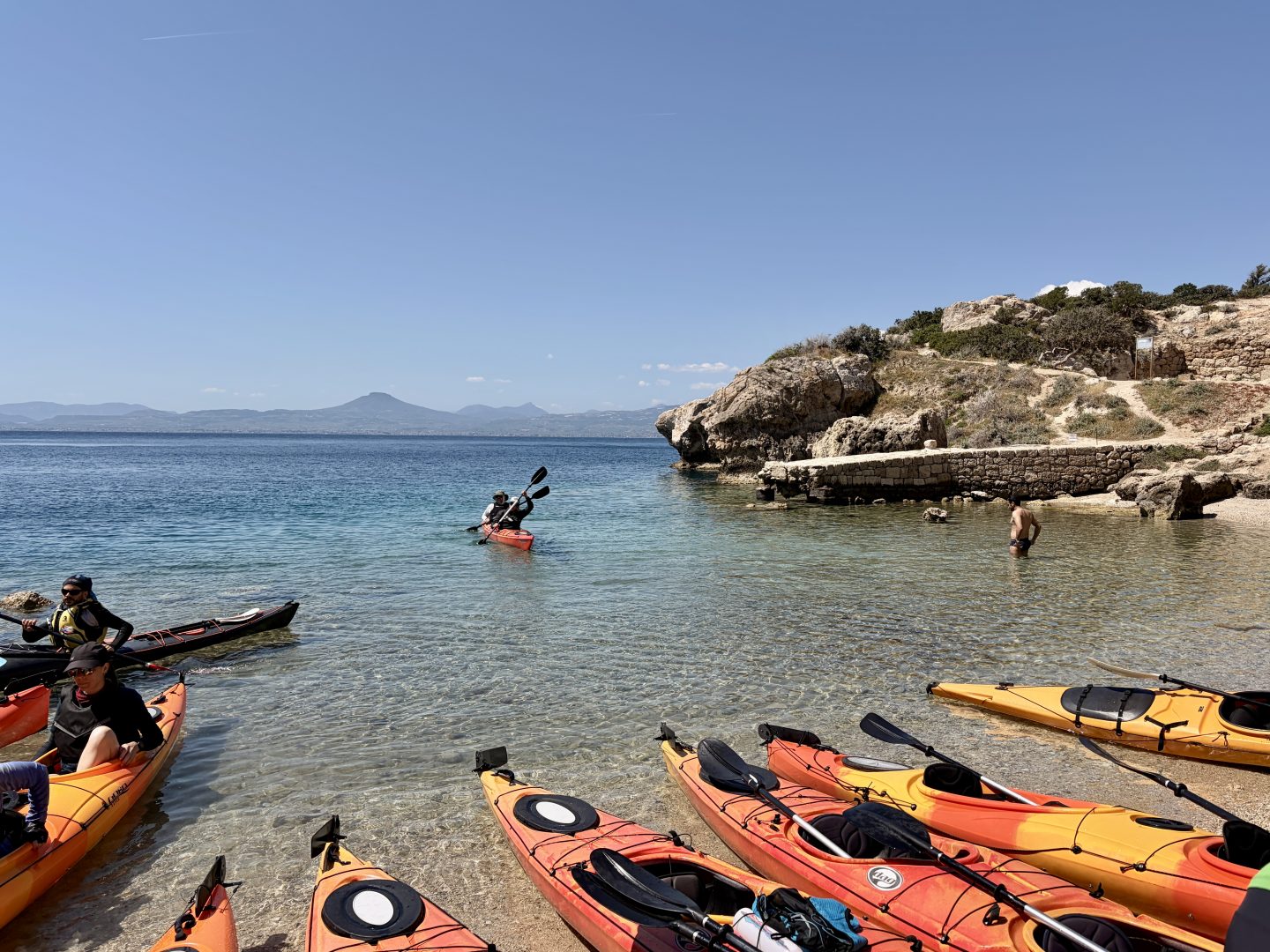
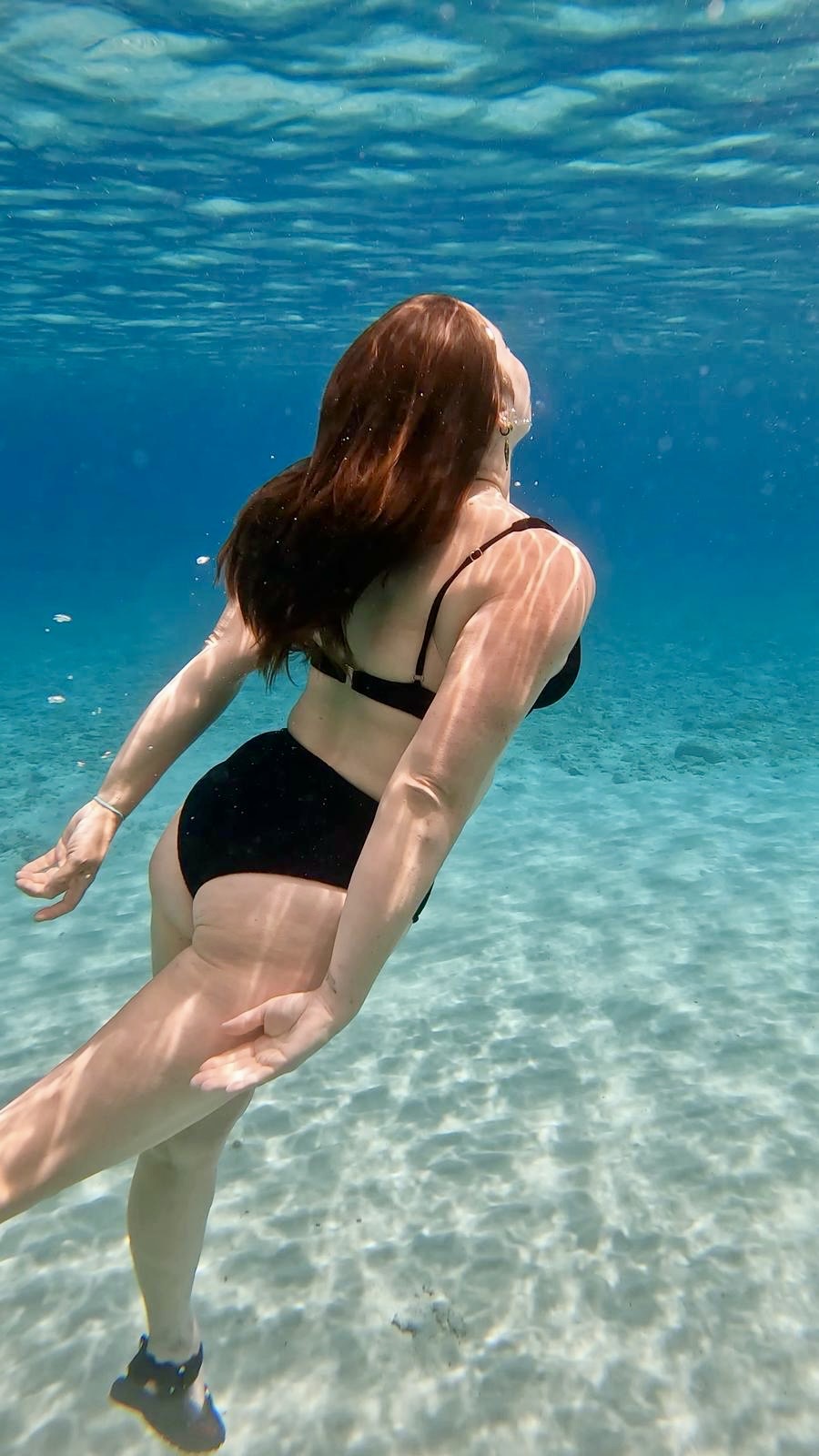
Grab a paddle and glide across water so clear you could count the pebbles on the seabed in a kayak. Limestone cliffs rise steeply from the sea, interrupted only occasionally by tiny coves that looked as though they’d been designed for smugglers – or sea gods.
This is what it’s like to kayak to the Sanctuary of Hera at Perachora, dedicated to Zeus’s wife and queen of the Olympian gods. Drift ashore onto a tiny crescent beach where you can take a cooling dip before climbing to the weathered ruins above. The temple to the Queen of the Gods is modest compared with Greece’s blockbuster archaeological sites, but that’s part of its charm. Here it’s less about grand monuments than atmosphere: sea, stone and mythology blending against an impossibly blue backdrop.
Go there: Trekking Hellas offer a four-hour paddling adventure from Lake Vouliagmeni.
ET IN ARCADIA – GREECE’S ORIGINAL PARADISE
Long before escaping to the countryside became fashionable, poets were dreaming of Arcadia. The mountainous heart of the Peloponnese has represented an idyllic rural paradise for centuries, and even the phrase Et in Arcadia Ego has trickled into Western culture.
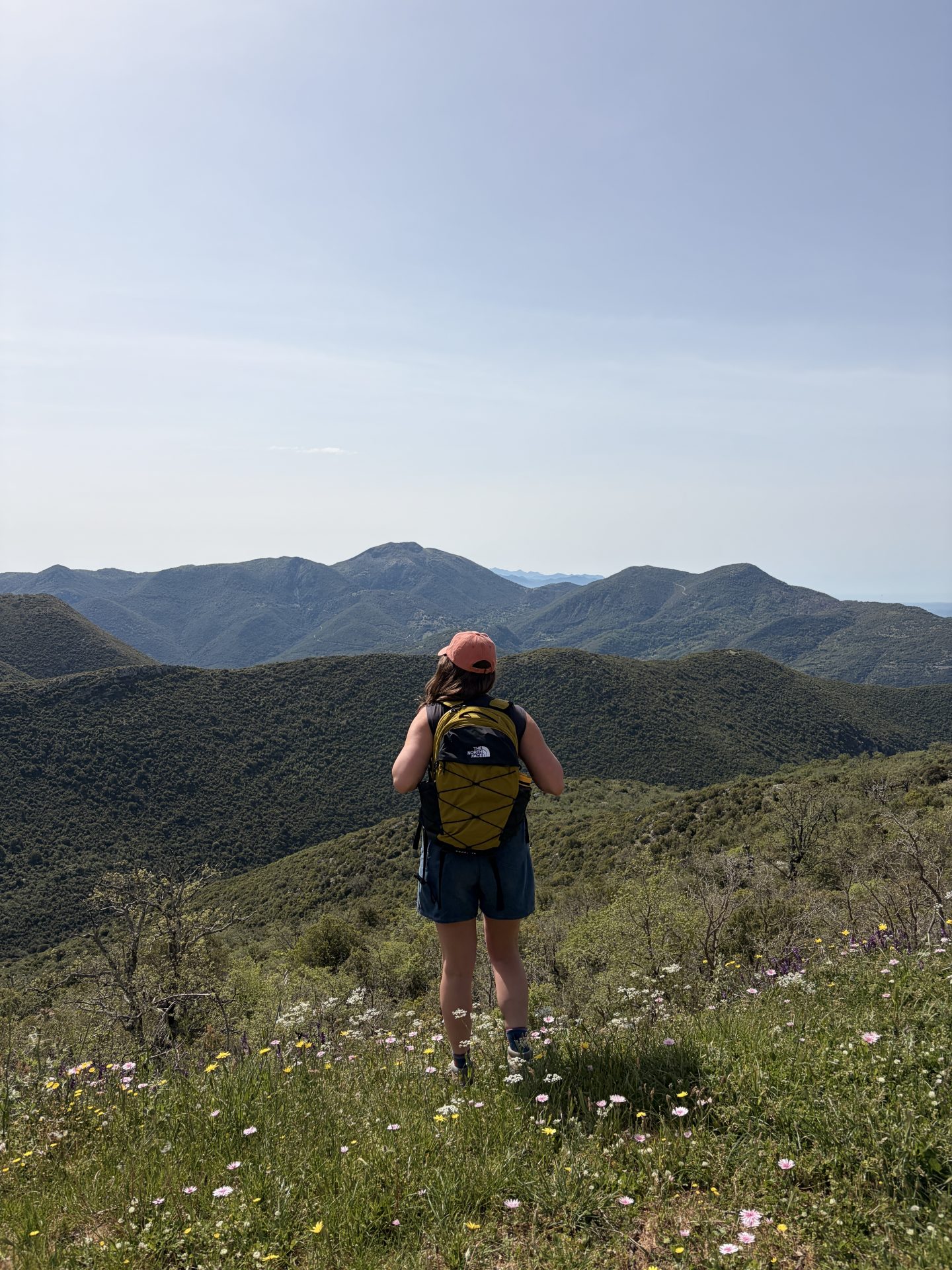
Walking the Menalon Trail, it’s easy to understand why. This new 75-kilometre, eight-section mountain hiking route passes through the ancient stone villages of Stemnitsa, Dimitsana, and Vytina as well as winding through forests, mountain villages and deep river gorges, linking ancient footpaths once used by shepherds, monks and traders. We spent the day following sections of the trail through wildflower meadows scented with thyme and oregano, stopping at the Monastery of Prodromos, built directly into the rock face high above the spectacular Lousios Gorge. Legend says the infant Zeus was bathed in the Lousios River below.
Go there: Find out more about hiking all or a section of the Menalon Trail.
FOLLOW IN ODYSSEUS’ FOOTSTEPS ON VOIDOKILIA BEACH
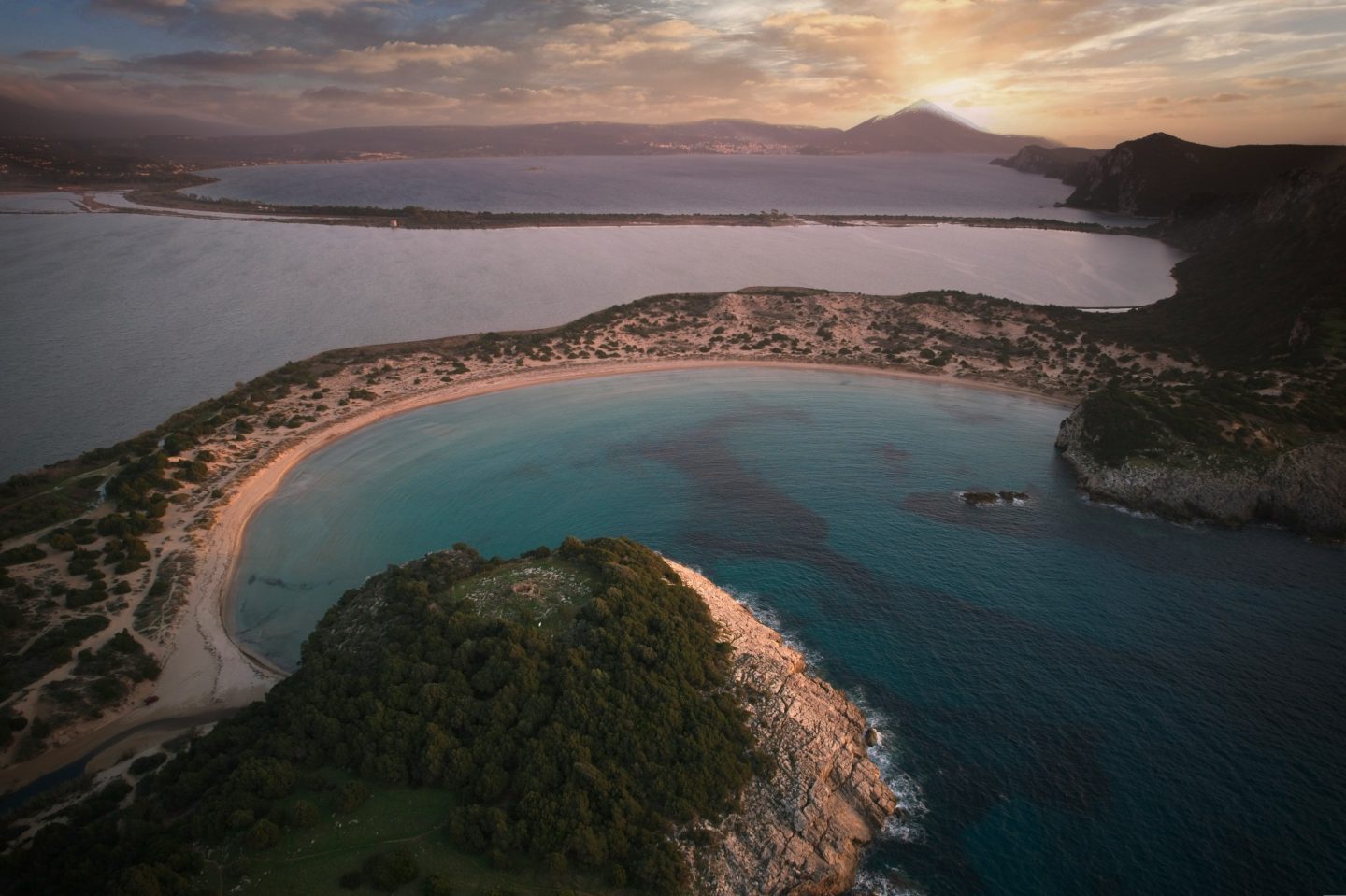
If you’re planning an Odyssey-inspired itinerary, the coast around Pylos and Navarino Bay is where you should start. Around the modern-day town of Pylos lies one of the landscapes most closely associated with Homer’s epic. This was the kingdom of wise King Nestor, where Telemachus first travelled in search of news about his missing father.
It’s also one of the most beautiful stretches of coastline in Greece. The star attraction is Voidokilia Beach, an perfect horseshoe of pale sand shaped like the Greek letter omega. You won’t see this incredible beach straight away – instead walk through dunes above Navarino Bay before the view suddenly opens up to a sweep of sand and crystal-clear calm waters.
Above the beach sits Nestor’s Cave, a huge sea cave linked in mythology with Hermes and Apollo. The climb up is steep enough to earn your swim afterwards, but the reward is spectacular: turquoise sea framed by limestone cliffs, with Voidokilia spread out below like a postcard. These days it’s so peaceful it’s hard to imagine that this spot was totally taken over by Nolan and his crew. Three huge warshios sailed the bay carrying Matt Damon as Odysseus and Zendaya as the goddess Athena, while Nestor’s Cave became Polyphemus’ lair.
Go there: How to visit Voidokilia Beach
EXPLORE MANI – GREECE’S WILD SOUTH
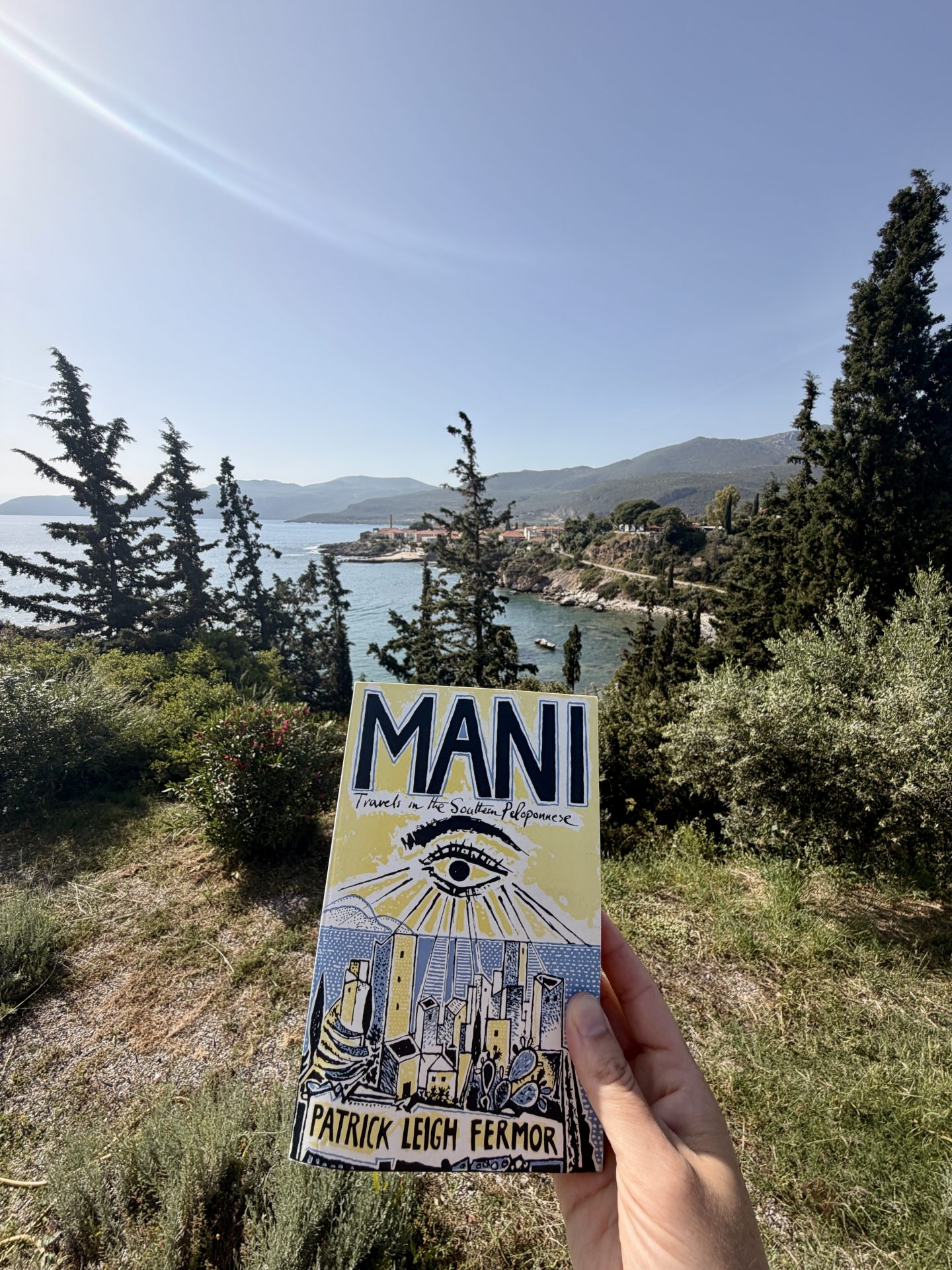
The deeper south you drive into Mani, a mountainous southern peninsula of the Peloponnese, the wilder everything becomes. And you shouldn’t take your road trip for granted – there wasn’t a proper tarmac road to its deepest corners until the 1980s. For centuries this was one of Greece’s most fiercely independent regions, and it still feels wonderfully distinct.
Grey stone tower houses rise above olive groves, roads snake between dramatic mountains and tiny chapels appear unexpectedly beside the sea. My favourite stop was Kardamyli, a laid-back seaside village where mountains tumble straight into the Mediterranean. It’s easy to understand why writer Patrick Leigh Fermor chose to make his home here after he immortalised its uniqueness in Mani: Travels in the Southern Peloponnese, essential reading if you venture down south.
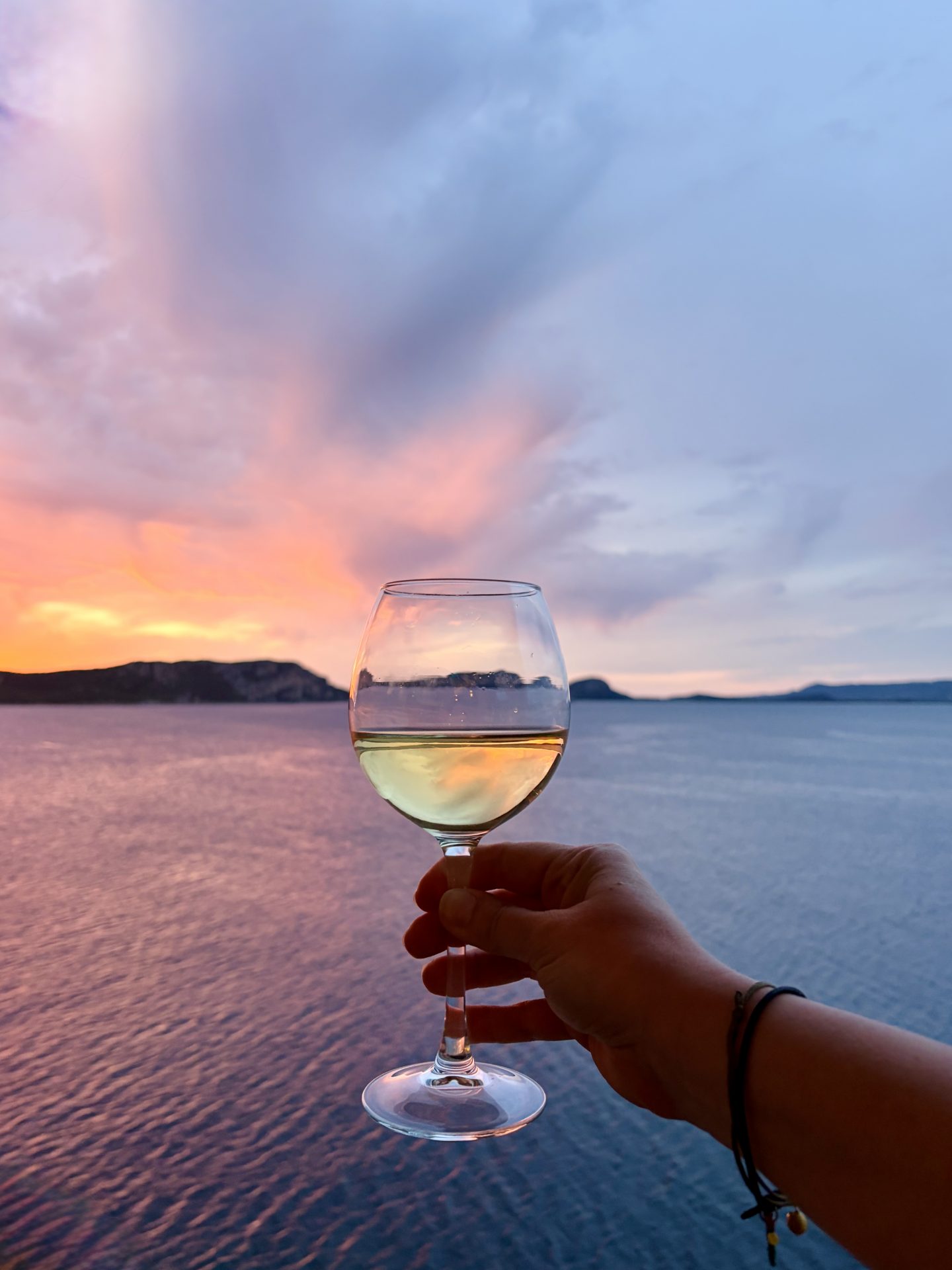
As the sun went down over the cypress trees, traditional music spilled from tavernas while locals danced in the square.
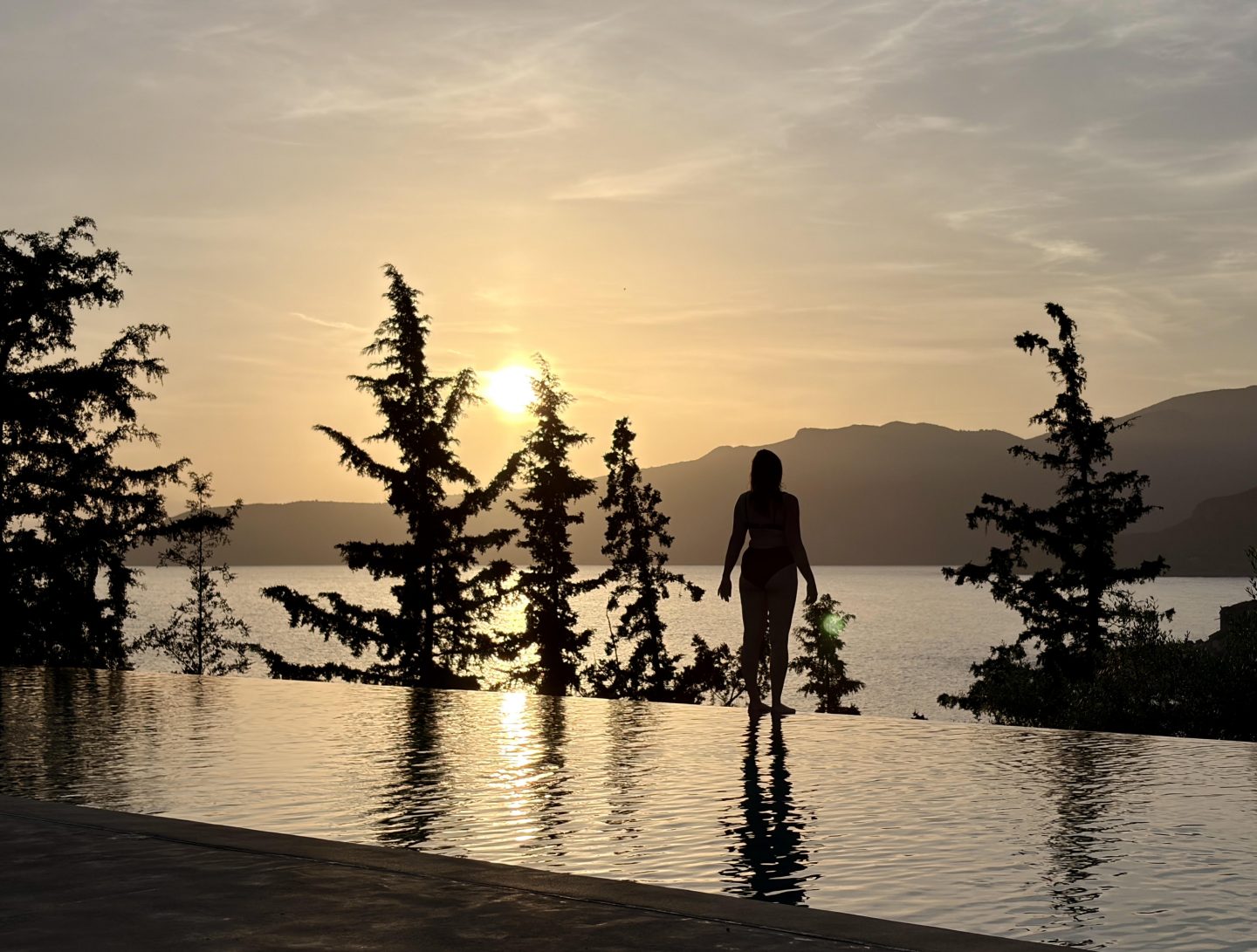
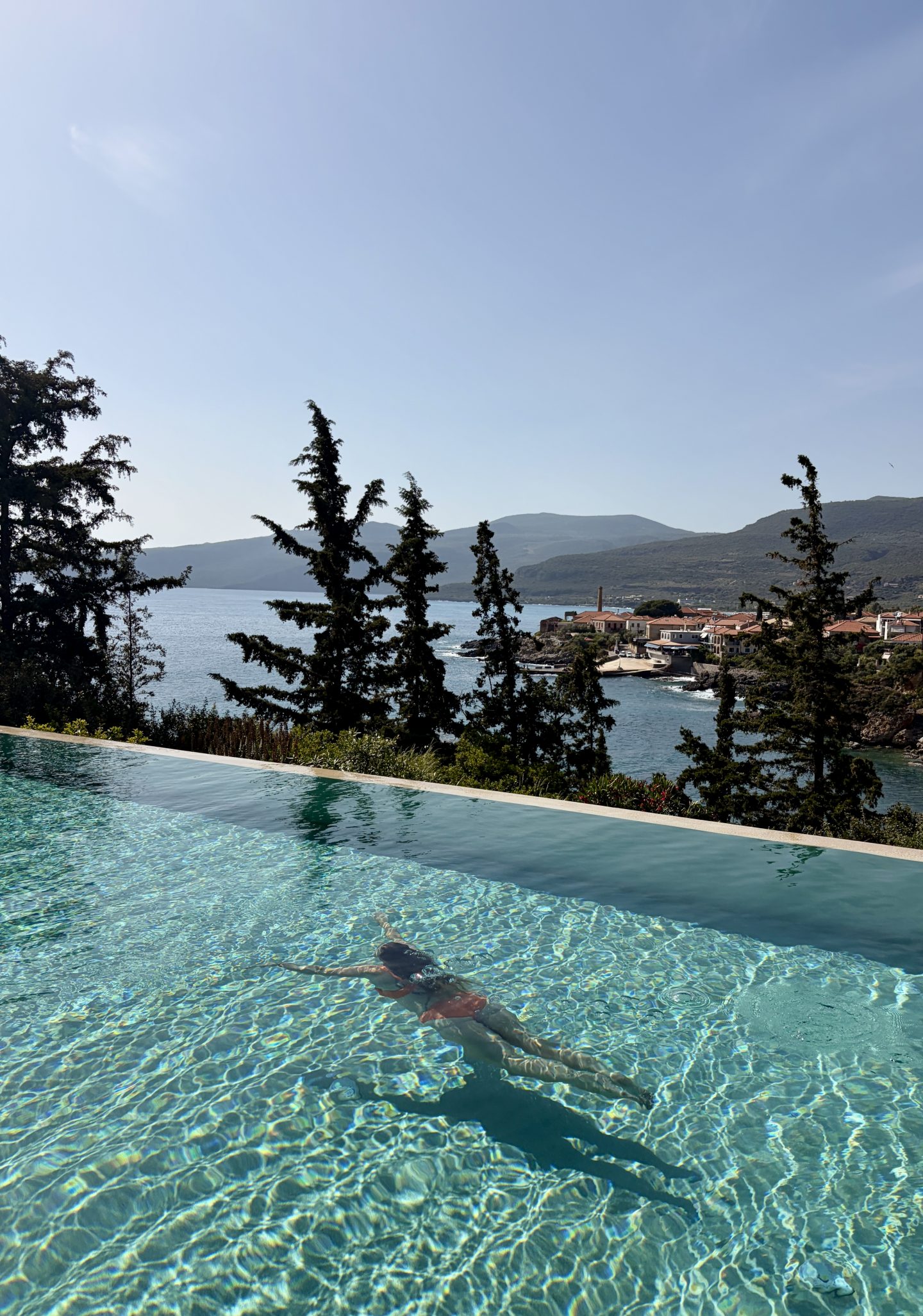
Go there: Stay at Diapori Suites, which has a pool so elegant I think Penelope would approve.
SEEK OUT THE UNDERWORLD IN GREECE’S FAR SOUTH
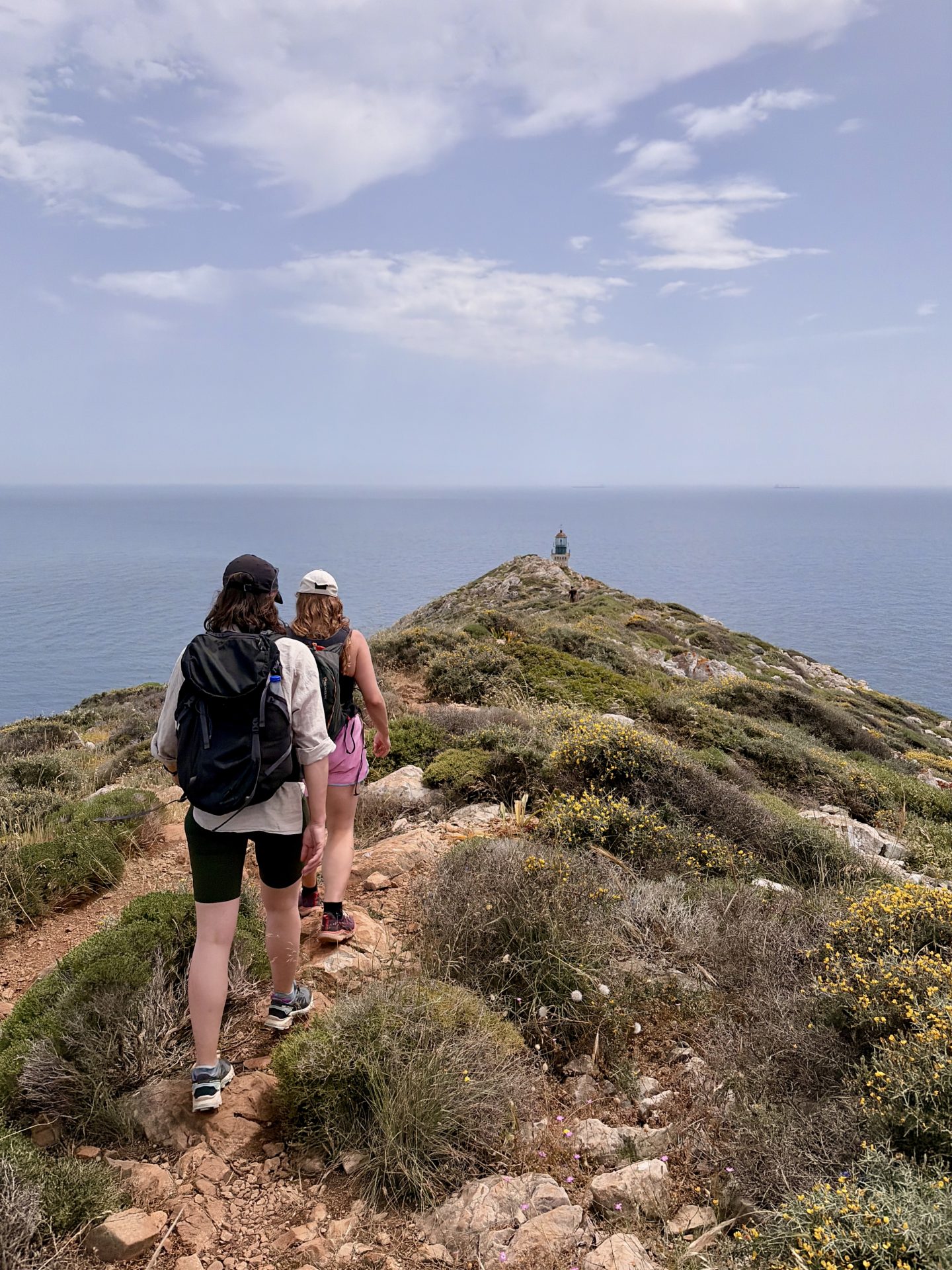
No Peloponnese road trip would be complete without making it as far south as you can go – to Cape Tainaro at the tip of the Mani, one of the most southerly points in Europe. The walk to this remote lighthouse follows a rocky coastal path with the sea crashing below. According to ancient mythology, this was one of the entrances to Hades, where heroes descended into the Underworld. Standing at mainland Europe’s southern tip, with nothing but open sea stretching towards Africa, it’s surprisingly easy to understand why.
Nearby, the fortified, semi-abandoned village of Vathia is crowned by cluster of stone towers straight from a fantasy novel.
Go there: Here’s how to hike to the lighthouse
END YOUR ODYSSEY WHERE EMPIRES ROSE AND FELL
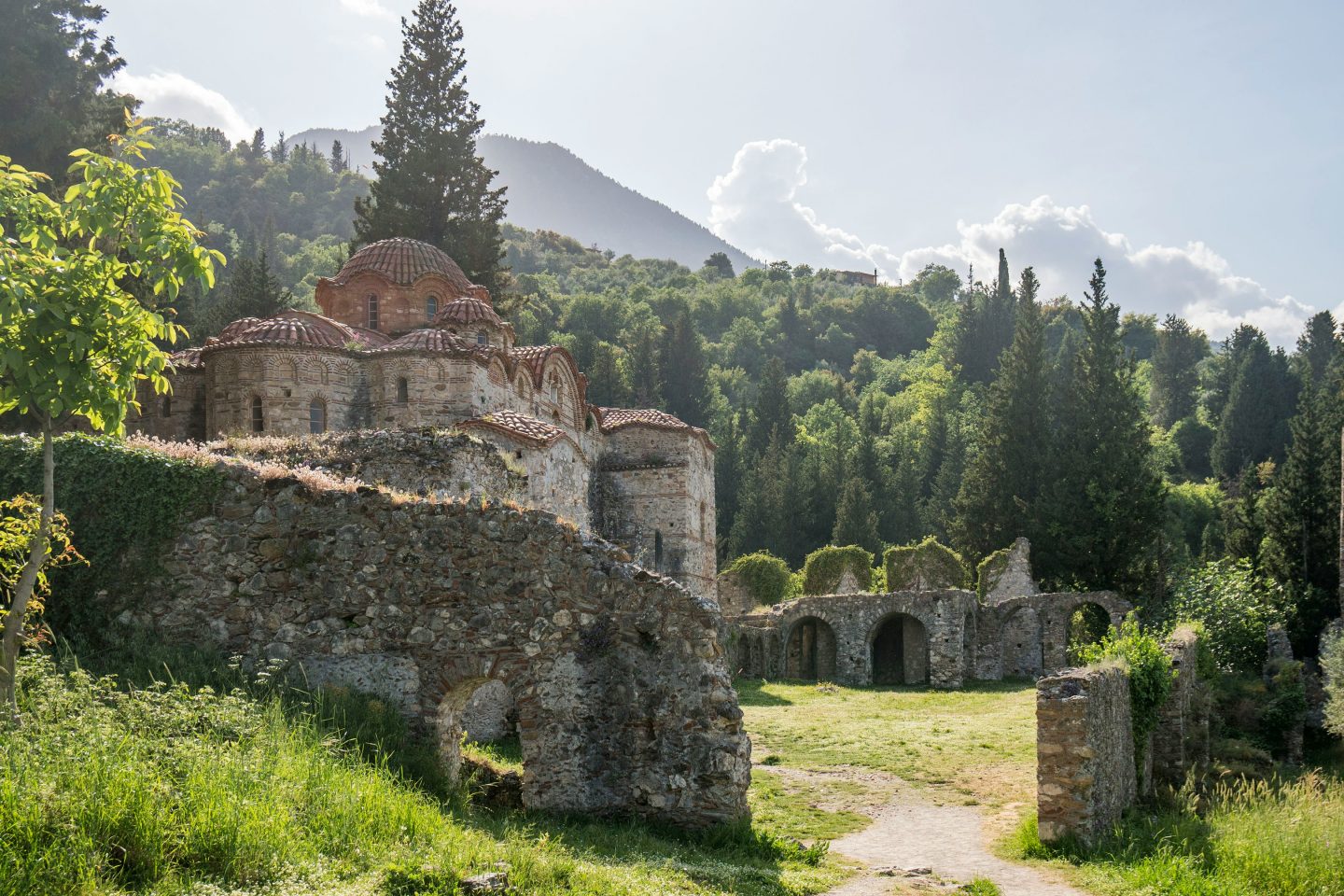
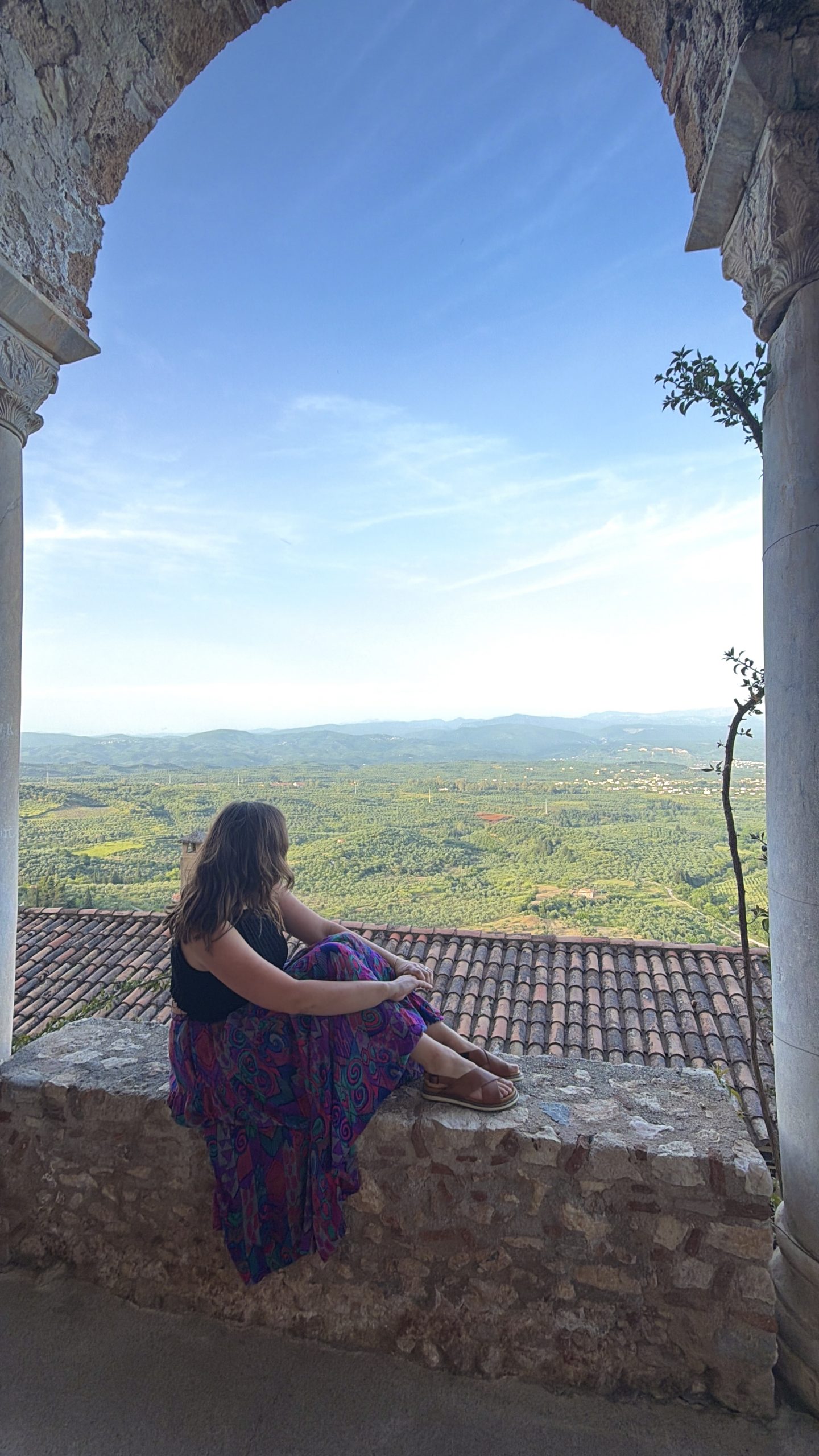
While the Peloponnese is often associated with ancient Greece, Mystras tells its own Byzantine story. Spread across a hillside beneath Mount Taygetus, this atmospheric abandoned city is a maze of churches, monasteries and palaces connected by cobbled paths winding through cypress trees. Unlike many archaeological sites, Mystras still feels wonderfully easy to immerse yourself in. Faded frescoes survive inside tiny chapels, wildflowers grow between ruined walls and every viewpoint seems to reveal another layer of history. There’s even a little museum with the preserved silken clothes of a Mystras princess.
Go there: Visit Mystras
PLAN YOUR OWN PELOPONNESE ODYSSEY
Best time to visit
May, June, September and October offer warm temperatures for hiking and kayaking without the intense midsummer heat. Spring brings wildflowers to the hillsides, while autumn is ideal for swimming in the still-warm sea.
Getting around
A hire car is essential. Distances may not look huge on the map, but the mountain roads are winding, and stopping at villages, archaeological sites and hidden beaches is half the fun.
Fly to
Athens International Airport for the northern Peloponnese (around 1.5–2 hours’ drive to Nafplio) or Kalamata International Airport for the southern Peloponnese and the Mani Peninsula.
Eat
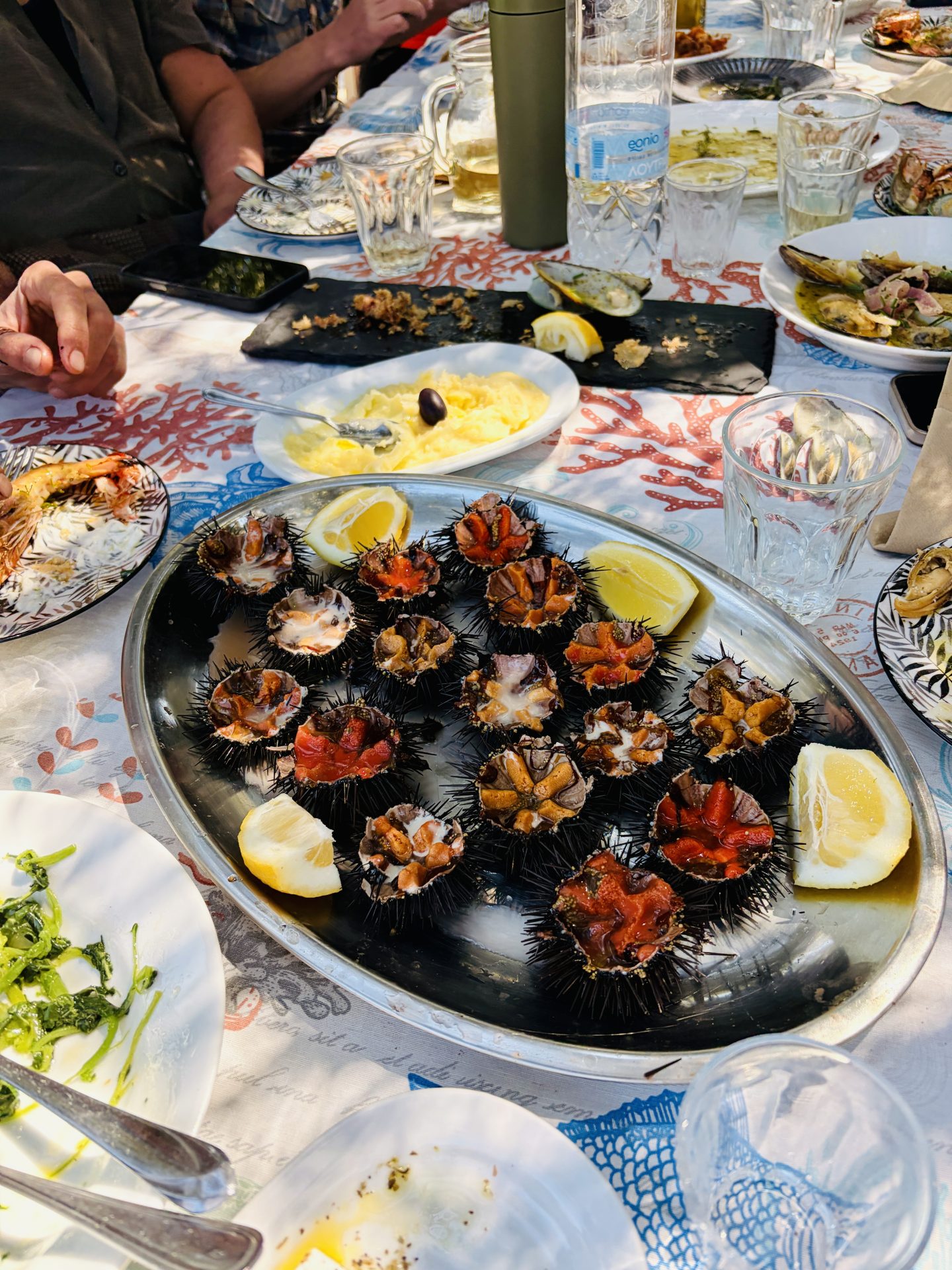
Kalamata olives, fresh seafood, grilled octopus, feta baked with honey and sesame, handmade pasta such as hilopites, local citrus fruits, and diples – delicate honey-soaked pastries traditionally served at celebrations. Wash it all down with a glass of local Nemea red wine or a shot of tsipouro.