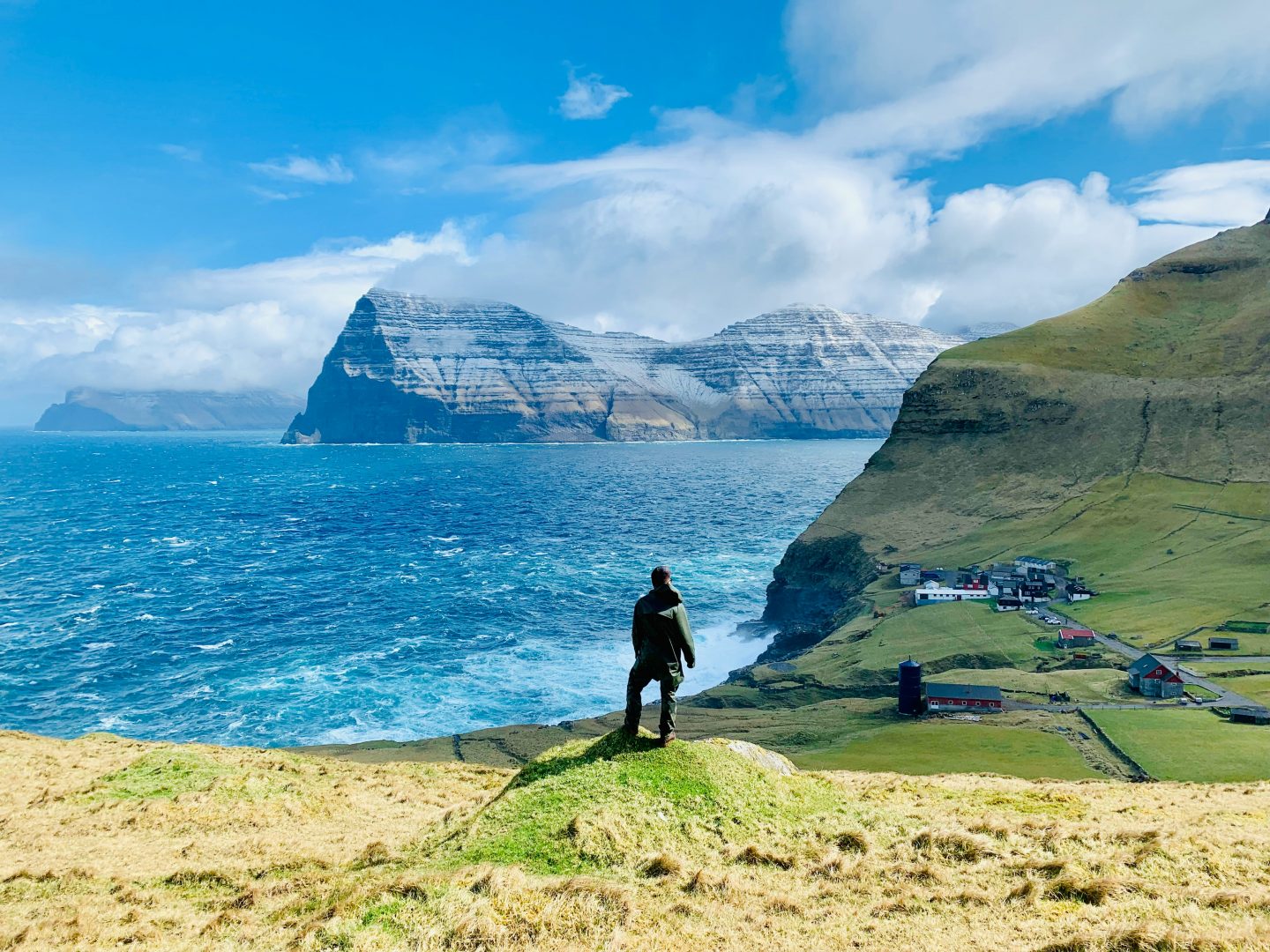
If you could step off the northern tip of Scotland and swoop over the empty expanse of the Atlantic Ocean you’d eventually hit land, and find yourself on a wild archipelago all alone in the middle of the waves. Welcome to the Faroe Islands. Many of us only know this tiny, self-governing region of the Kingdom of Denmark as an area mentioned in the Shipping Forecast, and these 18 islands are definitely remote, perched so high up on the map that the Faroese refer to the Outer Hebrides islands of Scotland, 200 miles below them, as the ‘Southern Isles’.
This is one of Europe’s most spectacular destinations for outdoor adventures – and despite its growing popularity with photographers and puffin lovers, the Faroes still feel like a crowd-free secret. Even better? You can get there in just an hour by flying from Scotland. Dreaming of wild, wide open spaces? Here’s why the Faroe Islands should be on your outdoor travel wish list.
Where are the Faroe Islands?
The Faroe Islands are a self-governing territory within the Kingdom of Denmark, sitting in the North Atlantic roughly halfway between Iceland and Norway. They’re remote, but surprisingly easy to reach. Flights from Edinburgh take around an hour and a half, making this wild corner of the Atlantic much more accessible than its appearance on the map suggests.
There are roads, bridges and undersea tunnels linking many of the islands, while ferries connect others. Hiring a car is the best option if you want to explore independently. The Faroes are small – just around 55,000 people live here – but the landscape is enormous. There are around 340 mountain peaks, more sheep than people and, rather wonderfully, just five traffic lights.
There are also virtually no trees. Instead, thick green grass covers the mountainsides, giving the islands their distinctive, almost fairytale appearance.
Hiking in the Faroe Islands
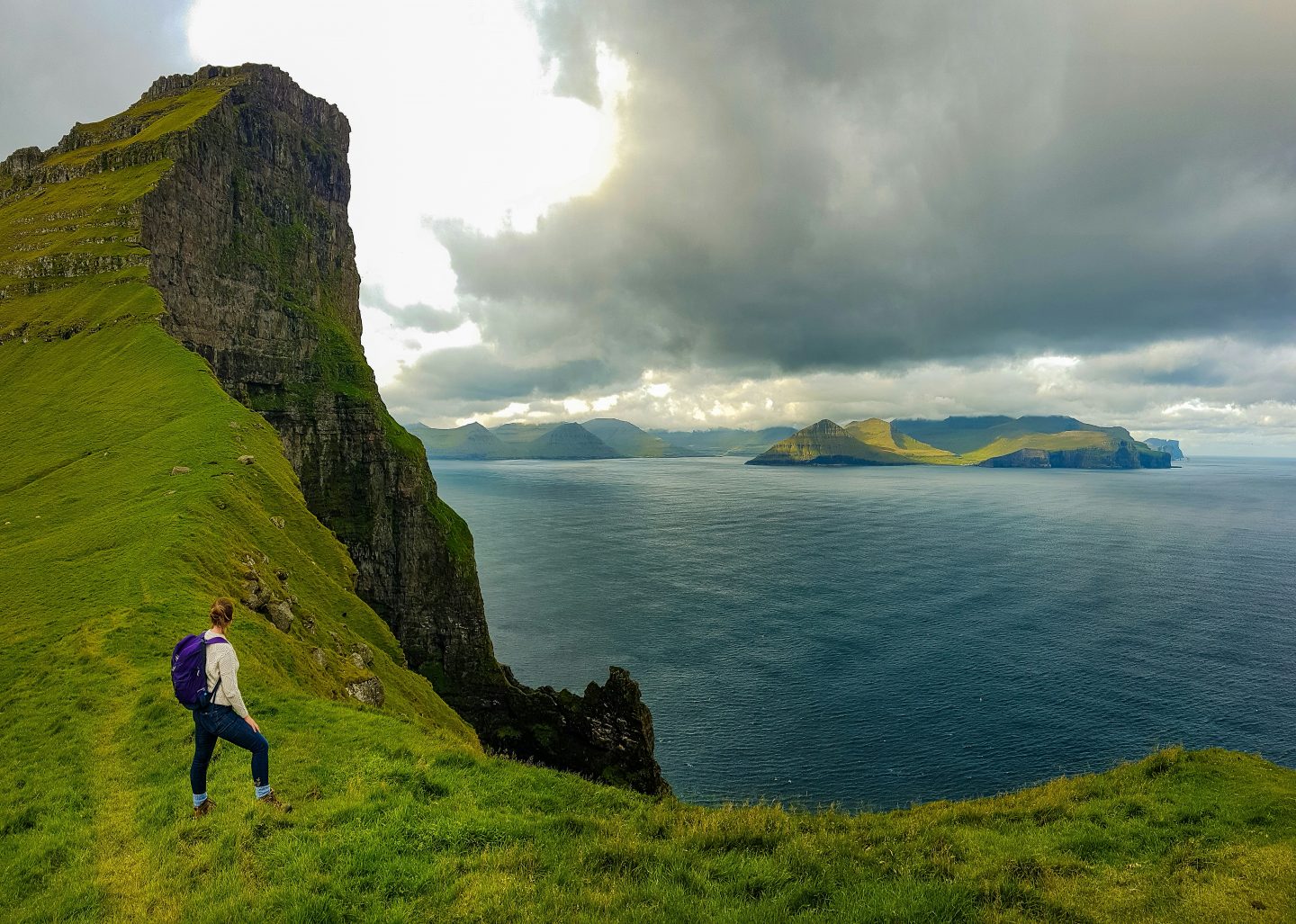
This a haven for hikers. Walking trails criss-cross the islands, ranging from relatively gentle routes between villages to steep, exposed mountain paths and narrow sheep tracks. The scenery is spectacular almost everywhere you go: jagged peaks, deep fjords, sea stacks and cliffs dropping straight into the ocean.
On the island of Suðuroy, in the south of the archipelago, I hiked with Faroese local Johan. He led me along dizzyingly narrow trails towards Ásmundarstakkur sea cliff and the Rituskor sea stacks, towering dramatically from the Atlantic.
We also crept around a headland to look for puffins, lying flat on our stomachs while the comical little birds popped in and out of their burrows with beaks full of fish.
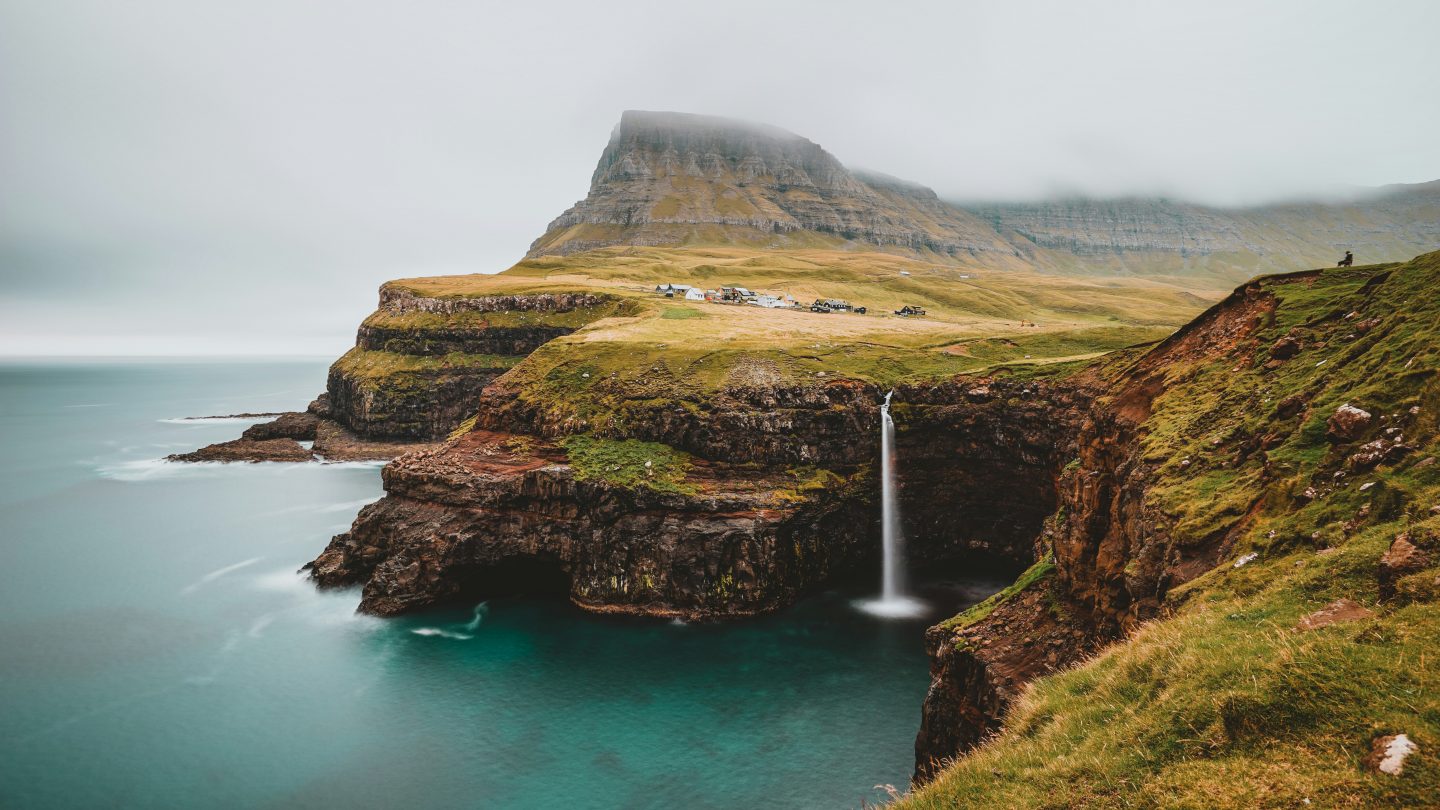
My favourite hike is the Old Postman’s Trail on Vágar.
This historic route was once used to transport post and supplies between communities – and even to carry coffins. Today, you can follow the trail on foot, climbing through the mountains towards the tiny village of Gásadalur.
The reward is one of the Faroe Islands’ most famous sights: Múlafossur waterfall, where water plunges from the edge of a sheer cliff directly into the Atlantic.
The trail is a good reminder that getting between villages wasn’t always as easy as it is today. The modern network of tunnels and roads has transformed life here, but walking these old routes gives you a real sense of how isolated Faroese communities once were.
Puffin watching on the Faroes
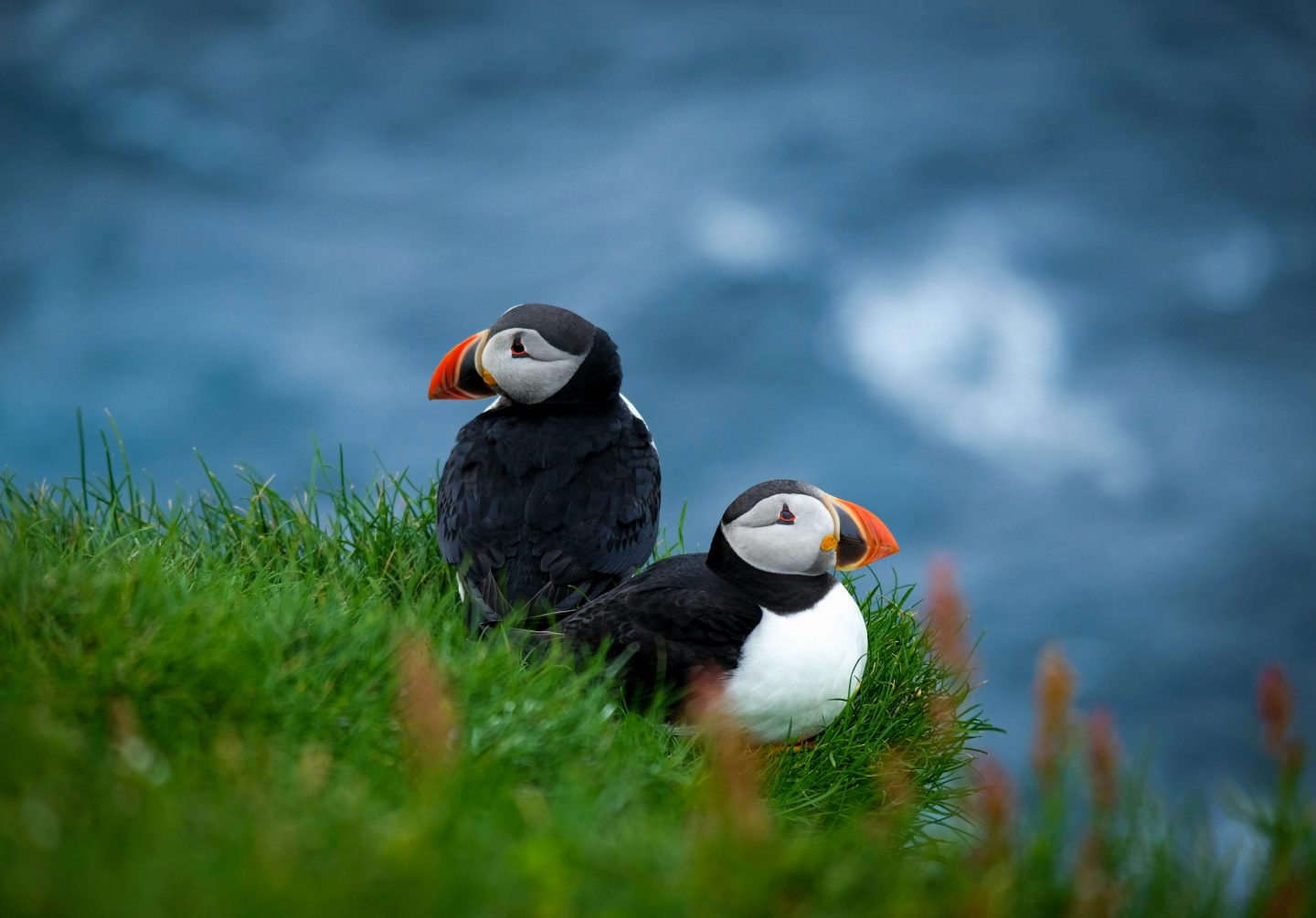
The Faroes are brilliant for wildlife, particularly seabirds.
Puffins are among the islands’ most famous residents, but you’ll also find fulmars, guillemots and other seabirds nesting around the cliffs. My puffin encounter on Suðuroy was one of the highlights of my trip, but the island of Mykines is another famous destination for birdwatching.
If wildlife is a priority, check local conditions and access arrangements before travelling, as weather can affect boat trips and hiking routes.
Explore Tórshavn

If the Faroes can be said to have a bustling Metropolis, it’s Tórshavn – or Thor’s Haven, surely the most lyrical name for a capital city anywhere on earth. The capital has changed drastically in the last twenty years (there’s even a Burger King now) but when I visited it felt timeless and relatively untouched. Old wooden cottages with turf-clad roofs spill down to the harbour where fishing boats are moored and ferries leave daily for the outlying islands. The city centre is stuffed with cosy pubs and cutting-edge restaurants serving dried fish, fresh sea urchin and other local delicacies, and you can stop for coffee in Paname Cafe or buy hiking guidebooks from H.N. Jacobsens Bókahandil, a 150-year-old bookshop.

Experience Faroese hospitality
Traditions are strong in these self-sufficient lands, and there’s a wonderful one just for visitors – Heimablidni. Translated as ‘home hospitality’, it’s the act of opening up your house to newcomers for dinner. You can simply be invited in, or the tourist office can put you in touch with Faroese farmers and fisherfolk. In Norðoyggjar I have supper with Anna and Rógvi. Anna serves up a wonderful supper – just-caught shrimp and salmon, fermented mutton hung in the wind to dry. Her husband Rógvi tells mestories of deep sea fishing all over the Atlantic.
How to visit the Faroe Islands
WHEN TO GO: I visited in June, when temperatures were around 10°C and the days seemed almost endless. Summer is an excellent time for hiking and wildlife, although you should still expect rain, wind and rapidly changing conditions.
WHAT TO PACK: The Faroese have a saying: there’s no such thing as bad weather, just a lot of it. Pack proper waterproofs, warm layers and sturdy walking boots, and don’t underestimate the mountains simply because they aren’t particularly high. Wind, rain, fog and steep terrain can make conditions challenging.
WHERE TO STAY: I stayed at the Hotel Føroyar, a great adventure base with views over Tórshavn, doubles from £77 per night and Heima í Stovu, a cosy, traditional boutique guest house on Suðuroy offering hiking and foodie experiences, rooms from £113 per night
Atlantic Airways fly to the Faroe Islands from Edinburgh twice weekly from £140 return.

